
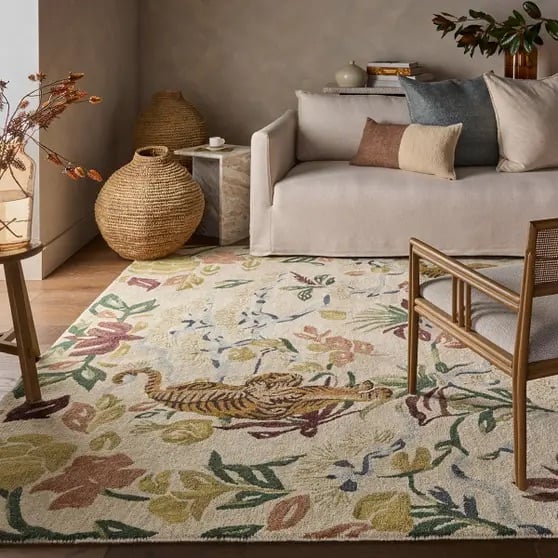
A rug is often one of the last things homeowners select when decorating a room, but it should be one of the first things they consider. The right rug can anchor a furniture arrangement, introduce color and texture, soften a room, absorb sound, and bring an entire design together. The wrong rug, especially one that is too small, can make even beautiful furniture feel disconnected and leave a room looking awkwardly proportioned. If you have ever stood in a beautifully furnished room and felt that something was off, the rug is often the reason.
At Coastal Cottage of Amelia, we believe thoughtful design is about creating a cohesive environment in which every element works together. Understanding the history, construction, materials, and placement of rugs can help you make an informed investment that is both beautiful and practical.
A World of History Beneath Our Feet
Rugs have been part of human history for thousands of years. Originally, woven floor coverings served practical purposes: providing warmth, protecting people from cold or hard surfaces, and offering comfort in tents and homes. Over time, they became expressions of cultural identity, artistic skill, trade, and wealth.
Some of the world’s most recognized rug traditions developed along historic trade routes and in regions where weaving techniques were passed from generation to generation.
- Persian rugs: Originating in present-day Iran, these rugs are celebrated for intricate floral motifs, medallions, detailed borders, and sophisticated color combinations. Traditional designs can be formal and ornate, while newer interpretations work beautifully in transitional interiors.
- Turkish rugs: Known for geometric patterns, rich colors, and distinctive regional designs, Turkish rugs range from bold tribal motifs to more elaborate decorative compositions.
- Oriental rugs: This broad term has traditionally described rugs from various Asian and Middle Eastern weaving traditions, including Persian, Turkish, Indian, Chinese, and Central Asian examples. Each region has its own characteristic patterns and techniques.
- Indian rugs: India has a long tradition of hand-knotted and handwoven rug production, including Persian-inspired floral patterns, contemporary geometric designs, and versatile wool rugs.
- Moroccan rugs: Often associated with the Atlas Mountains and other weaving regions of Morocco, these rugs feature geometric patterns, expressive symbols, and sometimes a thick, plush pile. Their relaxed appearance complements bohemian, coastal, and modern interiors.
- Scandinavian rugs: Typically characterized by restrained, often geometric patterns, natural materials, and understated palettes, these designs suit interiors that emphasize simplicity and function.
- Contemporary rugs: Modern designs may incorporate abstract art, organic shapes, tonal textures, unexpected colors, and innovative fibers. Many draw inspiration from traditional patterns while interpreting them in a fresh way.
Understanding a rug’s origins can add meaning to your selection. A traditional hand-knotted rug may become a family heirloom, while a contemporary flatweave might be the ideal choice for a relaxed coastal home. Neither is inherently better; the best choice depends on your lifestyle, budget, and design goals. For a closer look at the artistry behind historic designs, The Metropolitan Museum of Art explores the medallions in 16th and 17th century Persian carpets.
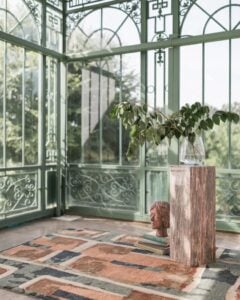
Understanding Rug Construction
A rug’s appearance and durability depend on more than its pattern. How it is made affects its price, texture, maintenance, and expected lifespan.
Hand-knotted rugs are created by tying individual knots around a foundation. They are labor-intensive and can last for generations when properly cared for. Quality varies according to fiber, knotting technique, density, and craftsmanship, so a higher knot count alone does not guarantee a better rug.
Hand-tufted rugs are made by inserting yarn into a backing with a tufting tool. They can offer substantial texture and detailed designs at a lower price than many hand-knotted rugs. However, their backing and adhesives may wear over time, and they generally do not have the same longevity as a well-made hand-knotted rug.
Handwoven rugs are produced on looms, often using flatweave techniques. They tend to have little or no pile, making them relatively lightweight and easy to move. They are excellent for casual spaces but may shift without a proper rug pad.
Machine-made rugs are manufactured using mechanical weaving or tufting processes. They offer a broad selection of colors, patterns, sizes, and price points, making them practical for busy households. Quality varies considerably, and many are easier to replace when styles or needs change.
Printed rugs feature designs applied to a textile surface. They can reproduce intricate patterns at accessible prices, although the printed design and surface may show wear differently from yarn-dyed or woven patterns.
When shopping, ask about the rug’s construction, fiber content, backing, cleaning requirements, and warranty. These details tell you more about how the rug will perform than its appearance alone.
Rug Materials: The Pros and Cons
The material you choose should reflect how the room is used, how much maintenance you want to manage, and the atmosphere you want to create.
Wool: The Classic Investment
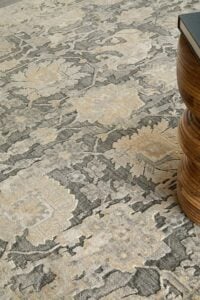
Wool is a natural fiber valued for its resilience, warmth, and luxurious feel. Its fibers can recover well from compression, making quality wool rugs a strong choice for living rooms, bedrooms, and other frequently used spaces.
Pros: Durable, naturally insulating, comfortable underfoot, and available in many traditional and contemporary designs. Wool can also conceal some everyday soil better than very light, smooth fibers. Wool is a natural antimicrobial fiber.
Cons: Usually more expensive than many synthetic alternatives. It can absorb spills and may be vulnerable to moth damage if stored or maintained improperly.
Best for: Living rooms, bedrooms, formal spaces, and homeowners seeking a long-term investment.
Cotton: Casual and Versatile
Cotton rugs are often lightweight, soft, and relatively affordable. They are common in flatweaves, small accent rugs, and casual designs.
Pros: Comfortable, easy to move, and available in a wide range of styles. Some small cotton rugs can be machine-washed, provided the care label allows it.
Cons: Cotton may stain, fade, or wear more quickly than a quality wool rug. Larger cotton rugs can be difficult to wash at home, and some constructions wrinkle or shift.
Best for: Casual living spaces, bedrooms, small sitting areas, and washable applications.
Jute and Sisal: Natural Texture
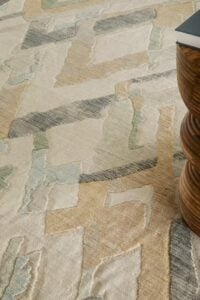
Natural plant fibers bring an organic quality that works particularly well in coastal, farmhouse, transitional, and relaxed contemporary interiors.
Jute is generally softer and more flexible underfoot, with a warm, textured appearance.
Sisal is typically firmer and more structured, creating a crisp, tailored look.
Pros: Natural appearance, understated colors, and beautiful texture. They can add visual warmth without introducing a busy pattern. Their neutral palettes also make layering with a smaller decorative rug easy.
Cons: Many natural-fiber rugs are vulnerable to water, staining, and discoloration. Jute can absorb moisture, while sisal can feel rough underfoot. Neither is usually the best choice for areas where spills are frequent.
Best for: Dry living areas, bedrooms, low-spill spaces, and layered coastal interiors.
Silk and Viscose: A Luxurious Sheen
Silk has long been used in fine decorative rugs because of its softness, detail, and subtle sheen. Viscose, a manufactured cellulosic fiber, is often used to imitate silk’s lustrous appearance.
Pros: Elegant surface detail, refined patterns, and a luxurious look that can elevate a formal room.
Cons: Silk is expensive and delicate. Viscose can be particularly sensitive to moisture, abrasion, and improper cleaning, and may show marks or shading where the pile is disturbed. Neither should be selected casually for a high-traffic family room.
Best for: Low-traffic formal spaces, decorative sitting rooms, and areas where appearance takes priority over heavy use.
Polyester and Polypropylene: Practical Synthetics
Synthetic rugs can provide attractive designs at accessible prices and are often selected for their ease of care.
Polyester is known for its softness and ability to display rich colors, although it can be less resilient under heavy furniture or sustained traffic.
Polypropylene, also called olefin, is commonly used for indoor-outdoor rugs and styles intended to resist many everyday stains and moisture-related problems.
Pros: Generally affordable, widely available, and offered in many colors and patterns. Some products are easy to spot-clean, and polypropylene is useful in covered outdoor spaces when the manufacturer’s instructions permit.
Cons: Performance varies by construction. Some synthetic rugs flatten or develop a worn appearance, and lower-quality versions may feel less substantial than wool. Not every synthetic rug is suitable for outdoor exposure, and stain resistance does not mean stain-proof.
Best for: Family rooms, rental properties, playrooms, casual dining areas, and selected indoor-outdoor spaces.
Blended Fibers: The Best of Several Worlds
Blended rugs combine materials such as wool and cotton, wool and synthetic fibers, or other fiber combinations to balance softness, durability, price, and appearance.
Pros: A blend may improve affordability, add texture, or provide practical performance while retaining some of the qualities of a premium fiber.
Cons: The advantages depend on the actual fiber percentages and construction. A blend is not automatically more durable or easier to clean than a single-fiber rug.
Best for: Homeowners looking for a balance of aesthetics, comfort, and budget.
The essential rule is simple: select the fiber for the way you live, not just for the way it looks in a showroom.
Rug Styles: Finding the Right Design Language
A rug can be a quiet supporting element or the focal point of an entire room. Not sure which direction fits your home? Our guide to 30 iconic interior design styles can help you find yours before you choose a pattern.
- Traditional: Persian-inspired florals, medallions, intricate borders, and layered colors. These rugs bring depth and history to traditional, transitional, and collected interiors.
- Transitional: A blend of traditional motifs and contemporary palettes. These designs are versatile when a room contains both classic furniture and modern accents.
- Modern and contemporary: Abstract compositions, asymmetrical forms, simplified geometry, and tonal patterns. These work well with streamlined furniture and edited interiors.
- Coastal: Soft blues, sandy neutrals, ivory, faded patterns, and organic textures. Coastal rugs can feel breezy without relying on literal seashell or nautical motifs.
- Scandinavian and Japandi: Restrained palettes, natural textures, simple geometry, and an emphasis on balance. These styles complement uncluttered, functional rooms.
- Bohemian and Moroccan-inspired: Graphic motifs, vintage-inspired finishes, and richly layered textures. They introduce personality and a relaxed, collected feeling.
- Farmhouse and rustic: Washed colors, natural fibers, understated patterns, and distressed finishes. These pair well with wood, linen, and other tactile materials.
- Solid and tonal: A single color or subtle variation in shade. These rugs provide a calm foundation when furniture, artwork, wallpaper, or accessories already make a statement.
A useful design principle is to think about contrast. If your sofa and chairs have solid upholstery, a patterned rug can add energy. If the room already contains patterned draperies, pillows, and wallpaper, a solid or subtly textured rug may provide the visual breathing room the space needs.
Also consider the pattern’s scale. A tiny repeating motif can look busy across a large floor, while an oversized pattern can become overwhelming in a small room. The rug should relate to the size of the room and the furniture, not merely match a color in a pillow.
Finally, remember that light changes how color reads. Look at rug samples in the room’s natural daylight and again in the evening, and consider how your lighting will affect the final look.
Why Rug Size Changes the Entire Room
Scale and proportion are fundamental principles of interior design. Scale describes how an object relates to the size of the room and other furnishings; proportion describes how its dimensions relate to the other elements around it. If a room feels unfinished even though you love every piece in it, the rug is often the missing link.
When a rug is too small, several things happen:
- Furniture loses its connection. The sofa and chairs appear to sit outside the area the rug is supposed to define.
- The room can feel smaller. A little rug surrounded by a large expanse of bare flooring may make the furnishings feel cramped, even when the room itself is spacious.
- The visual weight becomes unbalanced. Large sofas and substantial chairs overpower a small rug, making the composition feel top-heavy.
- The room feels unfinished. Instead of creating a cohesive design, the rug looks like an afterthought.
- The furniture arrangement becomes fragmented. The eye reads individual pieces rather than one comfortable, connected seating area.
A larger rug often creates the opposite effect. It visually gathers the furnishings into a single composition, improves the room’s flow, and can make the space feel more generous and intentional. As a general guideline, in a living room at least the front legs of every seating piece should rest on the rug.
This does not mean that every room needs the largest rug available. A rug that is too large can crowd the room, cover desirable flooring, or interfere with doors and transitions. The goal is the correct relationship between the rug, furniture, and available floor space.
Before purchasing, use painter’s tape to outline the proposed rug dimensions on the floor. View the taped area from the doorway and from different sides of the room. Make sure the rug clears doors, leaves appropriate floor borders, and supports the intended furniture arrangement.
If you are choosing new seating at the same time, browse our furniture so the rug and upholstery are planned together. And if you would rather not guess at sizes, our interior design team can help you get the proportions right the first time.
Common Rug-Buying Mistakes to Avoid
- Choosing color before size. A beautiful pattern cannot compensate for a rug that does not fit the furniture arrangement.
- Ignoring maintenance. A delicate silk-like rug may be beautiful, but it may not suit a household with children, pets, or frequent entertaining.
- Selecting a pattern without considering the rest of the room. A rug should coordinate with the overall palette, upholstery, window treatments, flooring, and artwork, including original pieces from local artists, without making everything match exactly.
- Assuming all natural fibers are easy-care. Jute, sisal, wool, and silk have very different responses to moisture, stains, and cleaning products.
- Buying without checking the actual dimensions. Standard labels can be misleading, and a rug’s stated size may not reflect the usable area once its shape and furniture layout are considered. Measure your room and furnishings before ordering.
The Finishing Touch That Makes the Room Work
A rug is one of the hardest-working elements in an interior. It brings together color, pattern, texture, comfort, and function while establishing the scale of a furniture arrangement. From an heirloom-quality hand-knotted wool rug to a relaxed natural-fiber design or a practical synthetic weave, there is an option for nearly every room and budget.
The secret is to look beyond the rug itself. Consider where it was made, how it was constructed, what it is made of, how it will be used, and how it relates to the furnishings around it.
Most importantly, get the size right. A thoughtfully selected rug should make your furniture feel connected, your proportions feel balanced, and your room feel complete.
At Coastal Cottage of Amelia, we believe the most successful interiors are not created by choosing individual pieces in isolation. They come together when every element works in harmony to create a home that feels welcoming, comfortable, and distinctly yours. Stop by our showroom at 1439 Sadler Road on Amelia Island and bring a picture of your space, and we can help you find the best rug solution. You can browse our rugs online, or contact our team to schedule a free design consultation. We are open Monday through Saturday, 10am to 5pm, and Sunday by appointment. www.coastalcottageamelia.com

