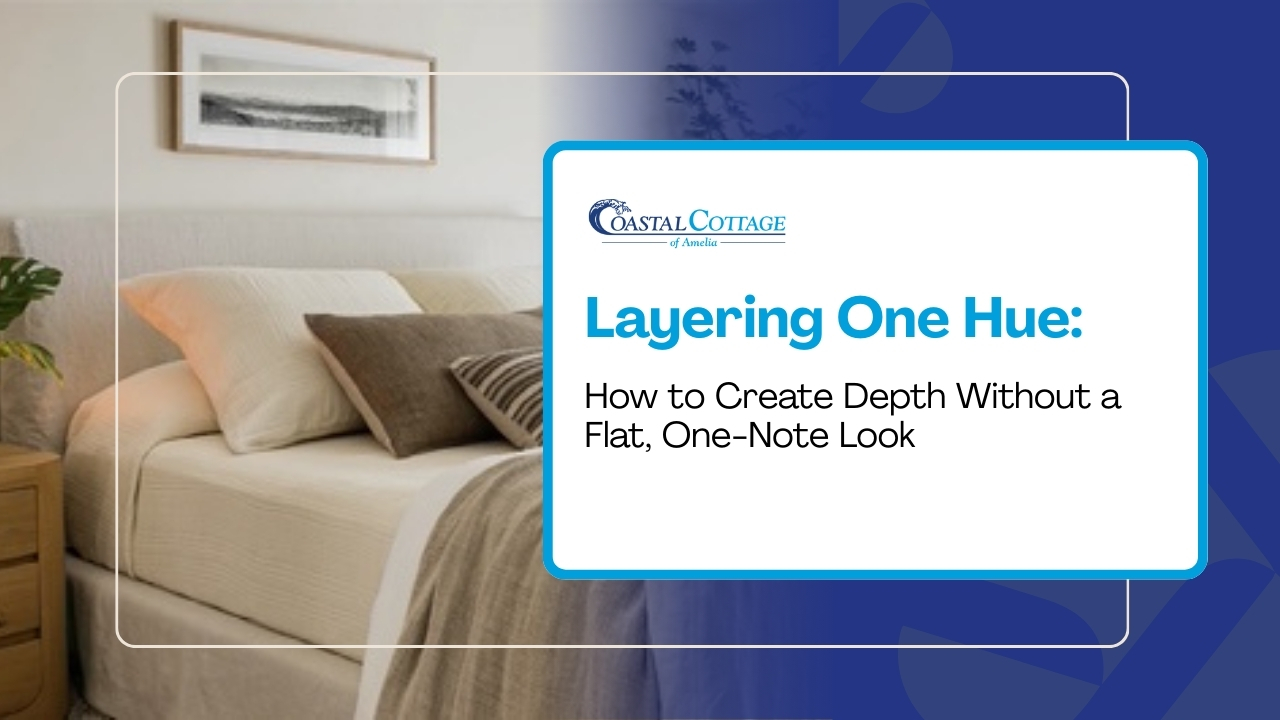
Monochromatic interior design focuses on using a single color layered through different tones, shades, textures, and finishes to create depth and visual interest. By avoiding matchy-matchy decor and introducing tonal variation, materials, and lighting, a room feels cohesive without appearing flat or sterile. Texture and light play a critical role in successful color layering, especially in coastal homes, where natural light enhances tone-on-tone palettes and keeps spaces feeling calm, sophisticated, and livable.
Monochromatic interior design is often misunderstood as playing it safe—but when done incorrectly, it can feel anything but intentional. One of the most common misconceptions in interior design is that using a single color automatically creates a cohesive space. While harmony is important, relying on a single exact shade throughout often leads to rooms that feel flat, sterile, or oddly unfinished—what designers lovingly call the matchy-matchy trap.
The good news? You can absolutely design with one hue and still achieve richness, depth, and visual interest. The secret lies in how to layer colors in a room using tonal variation, texture, and finish.
Layering colors within the same hue family—using variations of tone, shade, texture, and finish—creates a space that feels intentional, nuanced, and lived-in rather than rigid or showroom-perfect.

Understanding Hue vs. Tone, Shade, and Tint
Before diving in, it helps to clarify a few terms. A hue is the pure color itself—blue, green, beige, terracotta. A shade is a hue mixed with black, making it deeper and richer. A tint adds white, lightening the color. A tone includes gray, softening the intensity.
When all of these variations are used together, the room begins to breathe. These color layering techniques in interior design are what separate thoughtful spaces from one-dimensional ones.
A space that uses navy, slate blue, dusty blue, and pale sky blue is far more dynamic than one painted entirely in a single mid-blue. This approach is what makes single color room design feel layered and intentional rather than flat or one-dimensional.
Why Matchy-Matchy Feels Sterile
Rooms where the sofa perfectly matches the walls, the drapery, and the rug often feel stiff and overly controlled. That uniformity removes contrast, which is essential for visual comfort. This is the core issue behind matchy-matchy decor—when everything blends too perfectly, nothing stands out.
Real depth comes from contrast within consistency. Learning how to avoid matchy-matchy decor allows rooms to feel layered, intentional, and emotionally warmer without sacrificing cohesion.

Start With a Foundation Color
Choose your anchor hue first. This is typically established through wall color, large upholstery pieces, or cabinetry. From there, branch out into lighter and darker variations of the same color family.
For example, if your foundation is a warm taupe:
- Walls might lean soft and light
- Upholstery could move slightly deeper
- Accent chairs or case goods might introduce a darker, grounded tone
- Trim or ceiling details could be subtly lighter
This kind of tonal movement is a classic example of tone-on-tone decorating, where cohesion comes from variation rather than contrast.

Texture Is the Silent Partner
Color layering becomes exponentially more effective when paired with texture. Two items in nearly identical colors can look completely different when their surfaces change.
Think:
- Linen versus velvet
- Matte paint versus lacquer
- Woven wool next to smooth leather
- Honed stone paired with glossy ceramic
Texture creates shadow and light play, which adds depth even when the color difference is minimal. This is a hallmark of well-executed monochromatic room ideas. These subtle shifts in surface and finish are some of the most effective color layering techniques interior design professionals use to create depth without visual clutter.
Use Materials to Vary Saturation
Natural materials are excellent tools for tonal variation. Wood, stone, clay, and metal all bring organic color shifts that feel effortless rather than forced.
A green room, for example, might include:
- Painted cabinetry in a muted sage
- Olive or moss upholstery
- A marble with soft green veining
- Brass or aged bronze accents that warm the palette
These elements quietly expand the color range while staying within the same hue family. Incorporating unique home decor pieces with varied materials helps achieve this effortless layering.

Don’t Forget Light (Natural and Artificial)
Lighting dramatically alters how layered colors are perceived. Natural daylight can pull out undertones you didn’t expect, while evening lighting softens contrast and deepens shades. A well-layered color scheme accounts for these shifts.
Darker tones ground a space at night, while lighter tints keep it fresh during the day—a critical consideration in coastal interior design in Fernandina Beach, where light changes throughout the day influence how colors behave. Understanding how light transforms color is essential for achieving the right mood in monochromatic spaces.
Accent Without Breaking the Spell
Layering one hue doesn’t mean avoiding contrast altogether. Small doses of complementary or neutral accents—black, cream, wood tones, or metallics—help define edges and prevent the space from feeling washed out.
The key is restraint. These accents should support the dominant hue, not compete with it.

The End Result: Calm, Not Boring
When done well, layering one hue creates rooms that feel calm, sophisticated, and deeply intentional. The space reads as cohesive at first glance but reveals complexity the longer you’re in it. That’s the difference between a room that looks “put together” and one that truly feels designed.
Depth doesn’t come from adding more colors—it comes from understanding how to use the ones you already love. By layering tones, textures, and finishes within a single hue, monochromatic interior design becomes a powerful way to avoid the sterile look of uniform spaces and create interiors that feel rich, welcoming, and beautifully nuanced.
If you love the idea of a calm, cohesive space but aren’t sure how to layer color without making costly mistakes, our designers can help. Visit Coastal Cottage of Amelia or schedule a consultation to create a beautifully layered home that feels intentional, timeless, and uniquely yours.
For more help or to get questions answered, stop by Coastal Cottage of Amelia and chat with one of our designers www.coastalcottageamelia.com
FAQs
How do you layer colors in a monochromatic room without it looking flat?
Layer colors by using tints, tones, and shades of the same hue, combined with varied textures and finishes to create contrast and depth.
What is the matchy-matchy trap in interior design, and how do I avoid it?
The matchy-matchy trap happens when all elements are the same shade. Avoid it by introducing tonal variation and texture while staying within one color family.
Can you use only one color in a room and still make it interesting?
Yes. Using tone-on-tone decorating, layered materials, and strategic lighting keeps a single-color room visually engaging.
Where can I find coastal-inspired furniture and decor for monochromatic design in Fernandina Beach?
Local boutiques like Coastal Cottage of Amelia curate coastal furnishings and décor ideal for layered, monochromatic interiors.
Does Coastal Cottage of Amelia offer interior design consultations for color layering? Yes. Coastal Cottage of Amelia provides personalized interior design consultations focused on color layering, texture, and cohesive design.
What coastal color palettes work best for monochromatic interior design in Amelia Island homes?
Soft blues, warm neutrals, sandy beiges, muted greens, and sea-inspired grays work beautifully for coastal monochromatic interiors.

